x
Curious about how we compare to Sage 200?
Have your questions answered here:
Have your questions answered here:


Sage 200 looks like the logical next step — but CFOs choose AccountsIQ for smarter reporting and no server to maintain.
“Running reports in AccountsIQ is quick and we've got the capability to do multi-dimensional reporting, which will be really valuable to us. I'd say it takes about one tenth of the time we're used to in Sage.”
Who each is for
Teams who'd rather run finance than infrastructure
Genuinely cloud-native
You want a cloud-native platform with no servers, installs or backups to manage.
Group reporting in-system
Group reporting and consolidation are still spreadsheet-based.
Report by dimension
You need reporting across project, fund, site, region or brand.
Faster month-end
Month-end is slowed by manual intercompany postings, allocations and FX workarounds.
No upgrade projects
You'd rather avoid periodic upgrade projects with IT downtime and consultancy fees.
Deep modules and on-premise control
Deep operational modules
You need deep manufacturing, distribution or stock control modules.
Existing Sage partner
You have an established Sage partner relationship you want to keep.
Comfortable with infrastructure
Your team is comfortable managing local infrastructure and upgrade cycles.
Module-based reporting
Your reporting needs are met within existing modules and Excel.
Here’s how we compare, feature by feature
| Feature | Sage 200 | AccountsIQ |
|---|---|---|
| 100% browser-based, no local install | ||
| Automatic updates, no upgrade projects | ||
| 3-level GL structure | ||
| Multi-dimensional analysis (6 dimensions) | ||
| Intercompany eliminations handled in-system | Excel-assisted | |
| 250+ built-in reports with drill-down | ||
| Power BI and Excel live connection | ||
| Implementation delivered by the vendor | Partner-led |
Why finance teams choose AccountsIQ over Sage 200
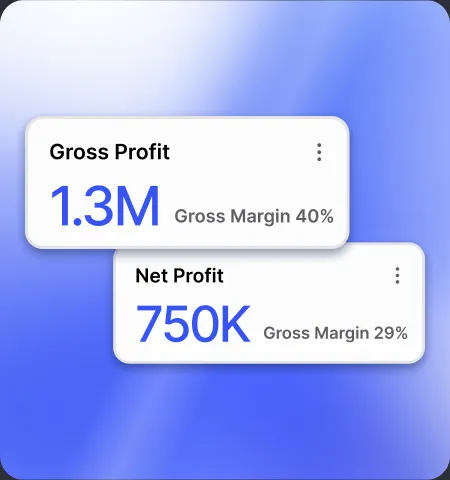
A common frustration with Sage 200 is that it isn't truly cloud-native. Desktop installations, local databases, server maintenance and backups all add complexity. AccountsIQ is 100% browser-based, with no servers, installs or maintenance.
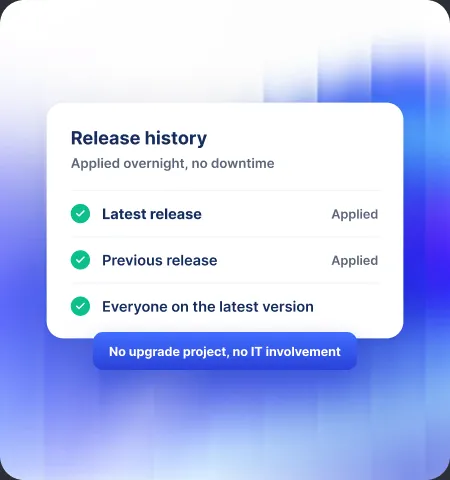
Sage 200 typically needs periodic version upgrades, often involving IT support, downtime and consultancy costs. AccountsIQ delivers automatic updates as part of a cloud-native SaaS model — and a lower total cost of ownership with no upgrade fees.
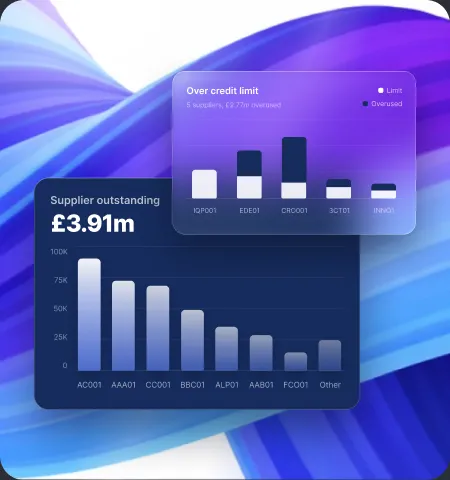
Many Sage 200 teams still rely on Excel for management reporting. AccountsIQ offers real-time dashboards, 250+ reports, six BI dimensions and Power BI connectivity in one connected environment.
Why CFOs switch


What do you like best about AccountsIQ?
AccountsIQ is a user friendly robust cloud-based accounting platform that's user-friendly. Implementation is smooth with great onboarding support, and the customer service team is responsive and helpful. It’s used daily by our finance team, offering strong features like, budgeting, and consolidations. Integration with other systems is solid via API. The learning academy is a great tool that provides videos and quizzes while transitioning to AccountsIQ which can be taken at your own pace.
See why mid-market finance teams choose AccountsIQ as their Sage 200 alternative — cloud-native, faster to implement, no server to maintain.
Book a DemoA common frustration is that it is not truly cloud-native. Desktop installations, local databases, server maintenance and backups create extra complexity. AccountsIQ is 100% browser-based with no servers, installs or maintenance.
Yes. Sage 200 typically needs version upgrades every two years, often involving IT support, downtime and consultancy costs. AccountsIQ delivers automatic updates as part of its SaaS model.
Many Sage 200 businesses still rely on Excel for analysis. AccountsIQ offers real-time dashboards, 250+ reports, six BI dimensions and Power BI connectivity.
Long-term cost can increase through additional modules, partner fees, upgrade charges and infrastructure. AccountsIQ offers a single subscription with no upgrade fees.
Yes. AccountsIQ typically goes live in 4–8 weeks with direct support from AccountsIQ experts, rather than a slower, partner-led implementation.
Yes. AccountsIQ automates more of the close — bank feeds and reconciliation, batch AP with approval workflows, recurring journals, and multi-entity consolidation with intercompany eliminations handled in-system.
Yes. Usually when group reporting is still spreadsheet-based, when more detailed dimensional reporting is needed, or when month-end is slowed by manual intercompany postings and FX workarounds.

