x
Curious about how we compare to Quickbooks?
Have your questions answered here:
Have your questions answered here:


You've grown. You need deeper insight, faster month-ends and more capacity — without extra workarounds.
“AccountsIQ does everything we need and it's an ideal next step up from QuickBooks. With QuickBooks, month-end could almost take the whole month! Now, we do it within five working days.”
Who each is for
Multi-entity groups outgrowing small-business tools
Multi-currency consolidation
You manage multiple companies and need automated multi-currency consolidation.
Beyond spreadsheet close
You're pulling group results together in spreadsheets each month.
Report by dimension
You need to report by project, fund, site, region or brand.
Intercompany in-system
You want intercompany recharging handled in-system, not by journal workaround.
Fewer bolt-on apps
You've bolted on several apps to cover gaps in core finance.
Single-entity, small-business accounting
One simple entity
You run a single entity with straightforward bookkeeping.
Lowest entry price
You want the lowest entry price and a self-serve free trial.
Standard reports only
Your reporting needs are met by standard P&L and balance sheet views.
No group needs
You don't need group consolidation or dimensional analysis.
Here’s how we compare, feature by feature
| Feature | QuickBooks | AccountsIQ |
|---|---|---|
| Core financials | ||
| Consolidation (multi-currency) | ||
| Intercompany recharging | ||
| 3-level GL structure | ||
| Multi-dimensional analysis (6 dimensions) | ||
| Advanced BI reporting | ||
| Unlimited data and scalability | ||
| Custom integrations | ||
| Bank feeds, AP automation, open API |
Why finance teams outgrow QuickBooks
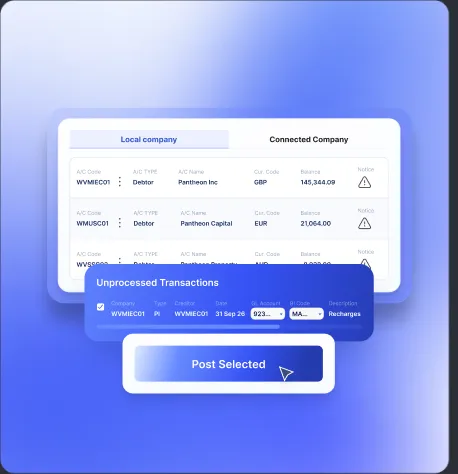
QuickBooks isn't designed as a multi-entity platform. AccountsIQ automates multi-currency consolidation and intercompany eliminations in-system. On G2, our multi-entity rating is 8.6 versus QuickBooks Online's 7.6.
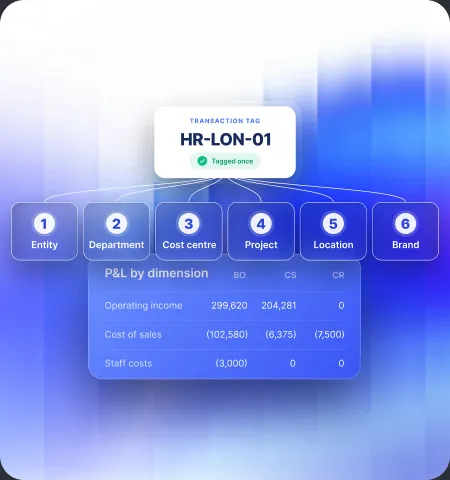
A three-level general ledger plus six BI dimensions on every transaction lets you slice by entity, department, project, fund, site or region — with live Excel and Power BI connections instead of manual exports.
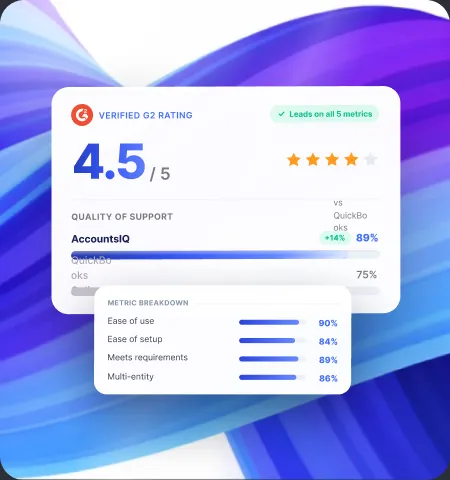
AccountsIQ's Quality of Support is rated 8.9 versus QuickBooks Online's 7.5. Our support team is 100% UK and Ireland based, with an average first response time of 27 minutes.
Why CFOs switch


What do you like best about AccountsIQ?
AccountsIQ is a user friendly robust cloud-based accounting platform that's user-friendly. Implementation is smooth with great onboarding support, and the customer service team is responsive and helpful. It’s used daily by our finance team, offering strong features like, budgeting, and consolidations. Integration with other systems is solid via API. The learning academy is a great tool that provides videos and quizzes while transitioning to AccountsIQ which can be taken at your own pace.
See why growing finance teams choose AccountsIQ as their QuickBooks alternative — consolidation, dimensional reporting and automation as standard.
Book a DemoAccountsIQ is a strong alternative once requirements move beyond single-entity accounting, combining cloud accounting, group consolidation, AP automation and BI reporting in one platform.
Usually when they need stronger multi-entity visibility, more advanced reporting and dimensional analysis, and less reliance on add-ons or spreadsheet-driven month-ends.
No. QuickBooks works well for straightforward needs, but groups typically need extra processes, spreadsheets or apps to handle consolidation and intercompany activity.
QuickBooks provides standard reporting for day-to-day management. AccountsIQ adds real-time dashboards, built-in business intelligence and up to six reporting dimensions.
AccountsIQ supports a 3-level general ledger plus six BI dimensions, a large library of built-in reports with drill-down, role-based dashboards, and live Excel and Power BI connections via OData.
Humentum reported that month-end on QuickBooks could almost take the whole month, and that they now complete it within five working days on AccountsIQ.
Common signs are a slow month-end driven by manual reconciliations and consolidations, limited reporting by project, site, fund or region, and approvals or intercompany handled through workarounds.

